
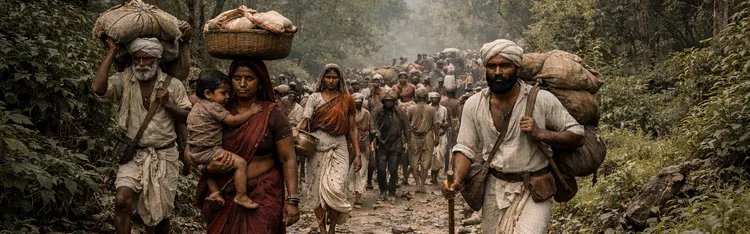
The Sabariya people, also known as the Oprol-speaking people, are found in the central part of Chhattisgarh, mainly in the districts of Janjgir-Champa, Baloda Bazar, Sakti, Raigarh, and Bilaspur. The largest concentration of the Sabariya population is in the Janjgir-Champa district. The current population of this language group is approximately 110,000.
The Sabariya language developed through contact with Telugu, Hindi, and Chhattisgarhi. According to oral history, several generations ago a king named Bhoj, who ruled over the region that included present-day Madhya Pradesh and Chhattisgarh, brought Telugu-speaking people from the tribal areas of Andhra Pradesh as captives. These people were skilled in digging wells and ponds using a tool called sabar, an iron rod used for digging soil.
After being brought to this region, they worked for the king constructing wells and ponds. However, no arrangements were made for them to return to their original homeland. Over time, they also lost knowledge of the exact place in Andhra Pradesh from which they had come. As a result, they settled permanently in Chhattisgarh. Their original Telugu language gradually mixed with Hindi and Chhattisgarhi, the languages of wider communication in the area, and eventually developed into a distinct language.
Because they commonly carried the sabar tool for their work, local people began referring to them as “Sabariya.” However, the community does not prefer this name, as they feel it sounds strange or inappropriate. Instead, they call their language “Oprol,” which means “Our Language,” and refer to themselves as Oprol-speaking people.
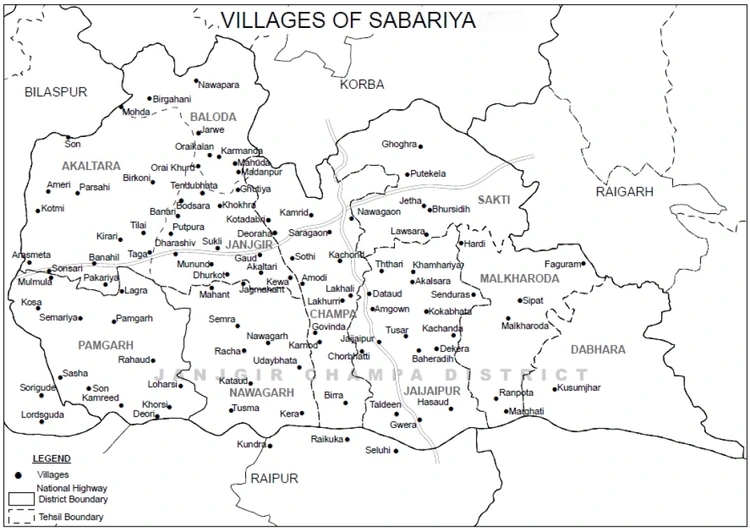
The Sabariya community lives in small hamlets spread across more than 83 villages in the districts mentioned above. Their settlements are usually located about 1–2 kilometers away from the main villages, and they often use the name of the nearest village to identify their hamlet.
These hamlets are small in size. In bigger villages, a settlement may have around 50–70 families, while in smaller areas it may consist of only 2–3 families. The Sabariya people generally live close to one another and maintain a simple, close-knit lifestyle.
They tend to live separately from the surrounding local communities, mainly due to historical, social, and economic reasons. As a result, their interaction with nearby villages is limited, especially in areas such as education, employment, and social activities.
Sabariya villages (By District)